The Variable They Forgot

Fadwa Al Qasem
Early in October, David Robinson explained in an essay in The Atlantic why he quit OpenAI. He had spent three and a half years there and had led the writing of the safety reports that accompanied its major product launches. His warning was that the companies building this technology are moving with too little care, and that the answer lies deeper than specific rules or new laws. "We need to talk about culture."
I have been saying a version of that sentence for twenty years. About a narrower problem, certainly: Arabic content, and what happens when technology is applied to language without understanding what language carries. But the sentence is the same.
It is a cultural problem.
Silicon Valley built something extraordinary, at a scope and speed that makes every earlier revolution look slow. It built it on a philosophy: move fast, break things, iterate until it works. That philosophy gave us the internet, the smartphone and social media. It also gave us products that damaged things nobody had thought to protect. The design never accounted for culture.
When I say culture, I mean something more fundamental than customs or heritage, the soft things that appear in mission statements. I mean the shared understanding of what matters, what is dangerous, what we owe each other, and how we decide when the consequences cannot be reversed. Culture is what accumulates when human beings navigate complexity together over a long time. It is the wisdom of trying, failing and trying again, and of learning that some things cannot be undone.
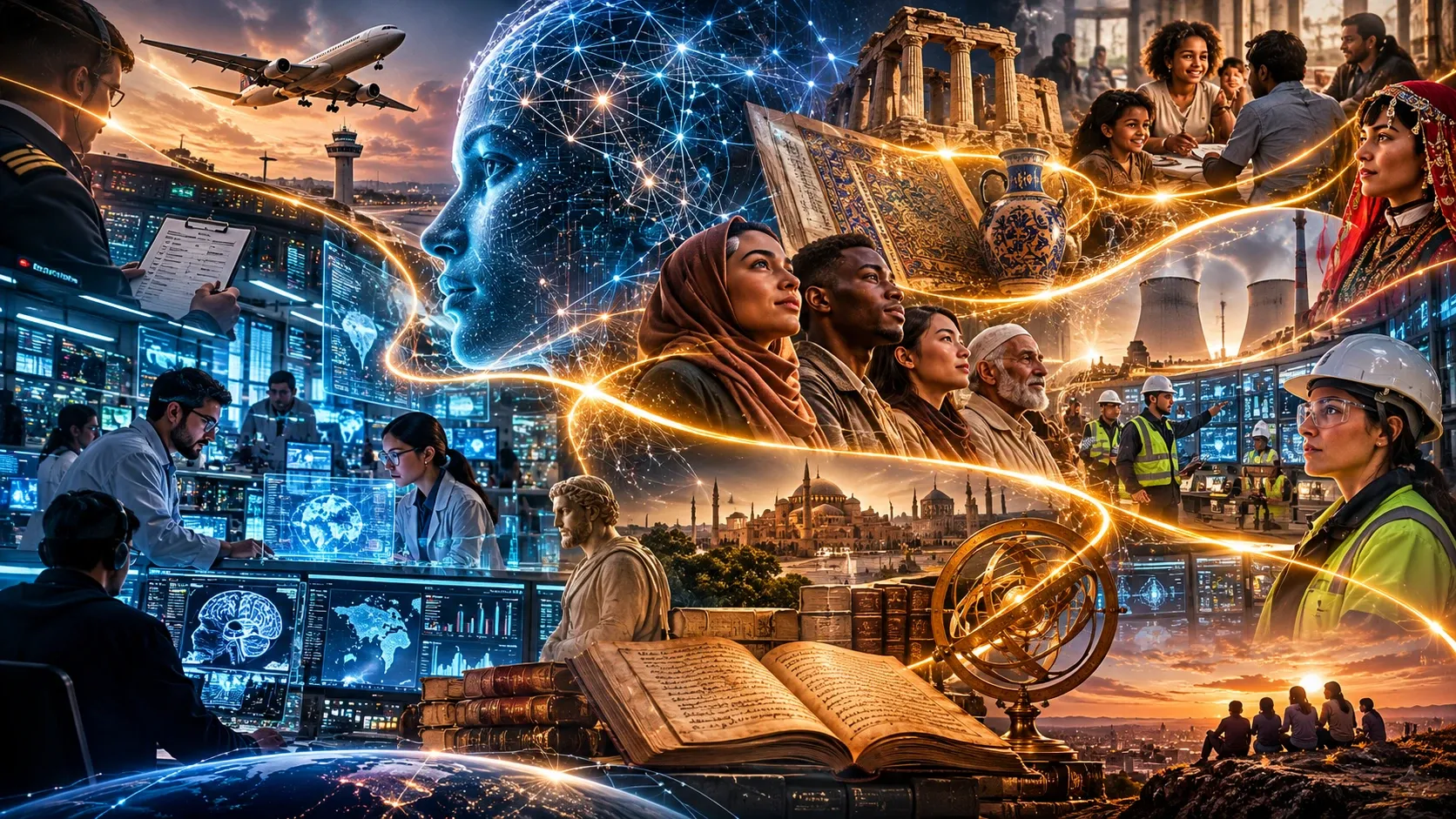
The institutions that manage genuinely dangerous technology, such as nuclear power stations, hospitals and aviation, are defined by culture more than by technical skill. The pilot has skill. The culture of aviation keeps the plane in the air: the checklist, the mandatory rest periods, the rule that the most junior crew member can challenge the most senior if something feels wrong, and the assumption, built into everything, that humans make errors and systems must account for that. Aviation trusts culture over individual heroics.
Robinson draws on exactly this. He argued that frontier AI labs should borrow the safety culture of nuclear power and aviation, with layers of redundancy and careful planning built in. He wrote that Silicon Valley lacks wisdom about handling dangerous technology and about caring for people.
I recognize this gap from closer to home.
In an NPR interview a week after his essay, Robinson said something I keep returning to. He described himself as a writer by avocation. In maths and coding, he said, a machine can tell whether an answer is right. In writing it struggles to tell good from bad, because it struggles to understand where the reader or listener is coming from. He added that AI may get better at this, and that nobody can be sure yet. That gap is the one we work in every day.
For twenty years, Tabeer has worked with organizations that had the technical capability to produce Arabic content and lacked the cultural intelligence to make it land. They had the tools. They lacked an understanding of what Arabic carries, what it asks of the reader, what it means to communicate in a language that has been the vessel of a civilization for fifteen hundred years. The tools produced words. The words did not cross.
That gap has grown wider as the tools have grown more powerful. A model that produces fluent Arabic without understanding the culture it is entering will produce something that feels wrong to many Arab readers, even when they cannot say why. They feel it because culture is felt before it is articulated. That is what culture is.
The same principle applies at the scale Robinson describes. His argument is that the people building the most powerful technology in human history are technically extraordinary and are working without the cultural foundations that make dangerous things safe to handle. A culture of wisdom about dangerous technology takes time, failure, and a willingness to be changed by both. Silicon Valley has been shaped primarily by success, and success produces a different kind of culture.
That wisdom has to be built slowly, by people willing to put caution ahead of speed.
I do not know how that happens at the scale of global AI development. I know how it happens in the work we do. It happens by insisting, every time, that the cultural question is asked before the technical one. The brief includes who will read this and what world they carry inside them. The tools serve the understanding.
That is a small thing in the context of an existential risk. It is also, I think, the only kind of thing that works. Cultures change from the ground up, through small insistences on getting it right and a refusal to let the technical have the final word.
If the future Robinson worries about is saved, I think it will be saved by people who understand that the most important questions are human ones.
And human questions require culture to answer them.